
$120K a year from a room of five people
What I learned running a small event badly, and what happens when people run them properly.
The entire room.
At his most recent small event, Kevin Nations added $120,000 in annual recurring revenue. Five people were in the room. No funnel, no launch, no webinar with 4,000 registrants.
I want to show you the receipts on that. First though, my own event. Because I ran it wrong and still made money.
I broke the framework and still made $7K
I ran my first small event after going through Kevin’s Big Money from Small Events training. I’ll be honest, I didn’t follow it properly. I rushed things he says not to rush and skipped structure he teaches for a reason.
I still walked away with $7,000 in profit and a room full of the right people.
I deepened relationships with clients and others I knew there. Some people had been online colleagues for several years and it was a great way to help them at a much deeper level. I was also able to refine and make what we share in the workshop much more powerful and transformative.
Afterward I could trace every spot where the event underperformed back to a place I went off script. That told me more than a perfect case study would have. My event is the floor. I got the framework wrong and still made a profit. The receipts below are what happens when people get it right.
The belief this challenges
If you sell expertise, you’ve probably absorbed a belief you never examined: more money means more people. More leads, more traffic, a bigger list, a bigger launch.
I run paid media for a living. I’d make more money telling you the fix is more ad spend. For most experts, it isn’t.
One of Kevin’s clients said it best, after collecting $115,000 from an event with three attendees that he filled with two Facebook posts to about 800 friends:
“You don’t have to sign up 4000 people on a webbie. All you need to do is make an offer.”
Three people. Two posts. $115K.
The math nobody runs
Say your offer is $5,000 and you want $100K a month. On the front-end-only model, that’s 20 new clients every single month. A sale every business day, forever. You’re on the phone nonstop and paying to win over a constant stream of strangers.
Kevin’s model needs five.
And three out of five is conservative. Kevin’s own events convert 80 to 90% of attendees into ongoing support.
By year two, renewals stack and people start asking to join your group directly because of its reputation. Kevin has clients running seven figures a year on three new clients a month.
Already know you want to talk about this? You don’t have to finish the case study.
Message LianaWhat it looks like when people follow the framework
These are real messages and posts from people who learned this model from Kevin. Names cropped for privacy, screenshots untouched.
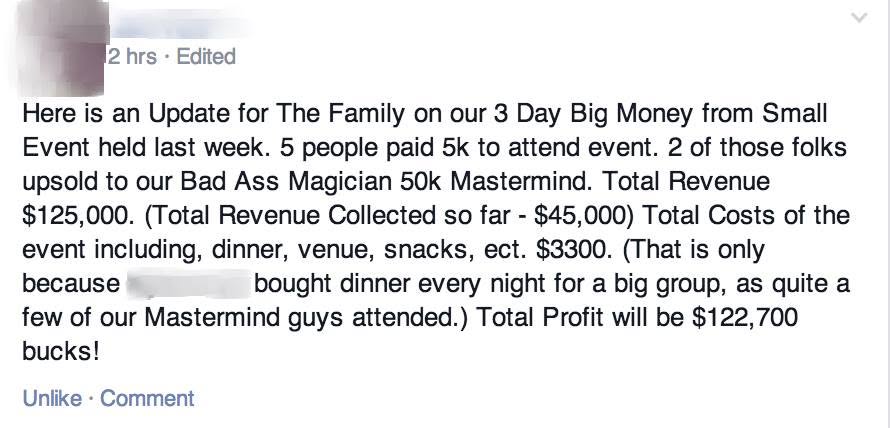
A 3-day event with 5 attendees at $5K each. Two of them moved into a $50K mastermind.
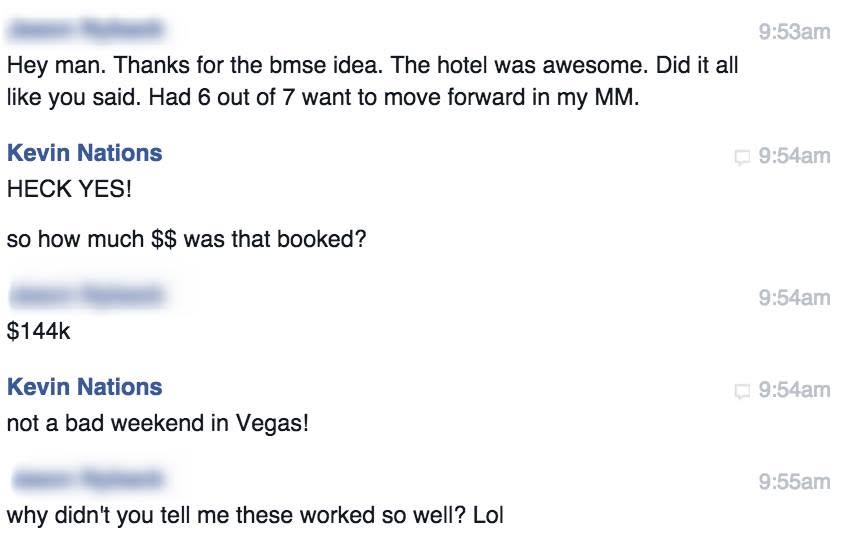
Seven people in a hotel room. Six wanted to continue into his mastermind.
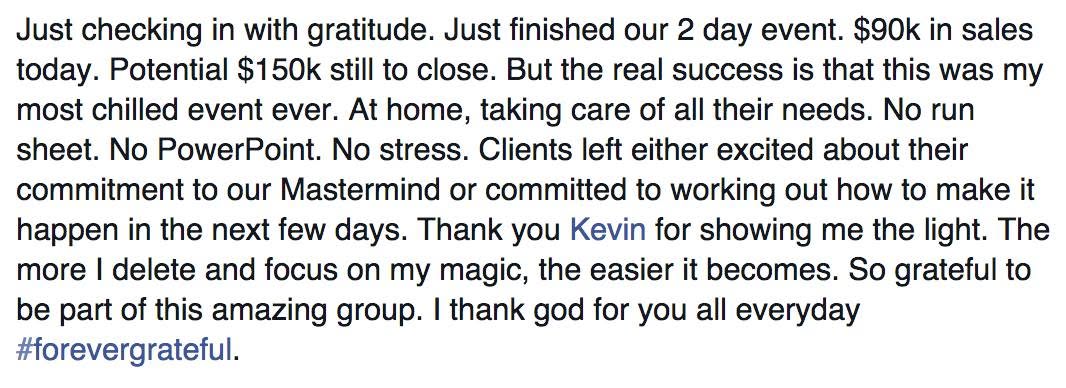
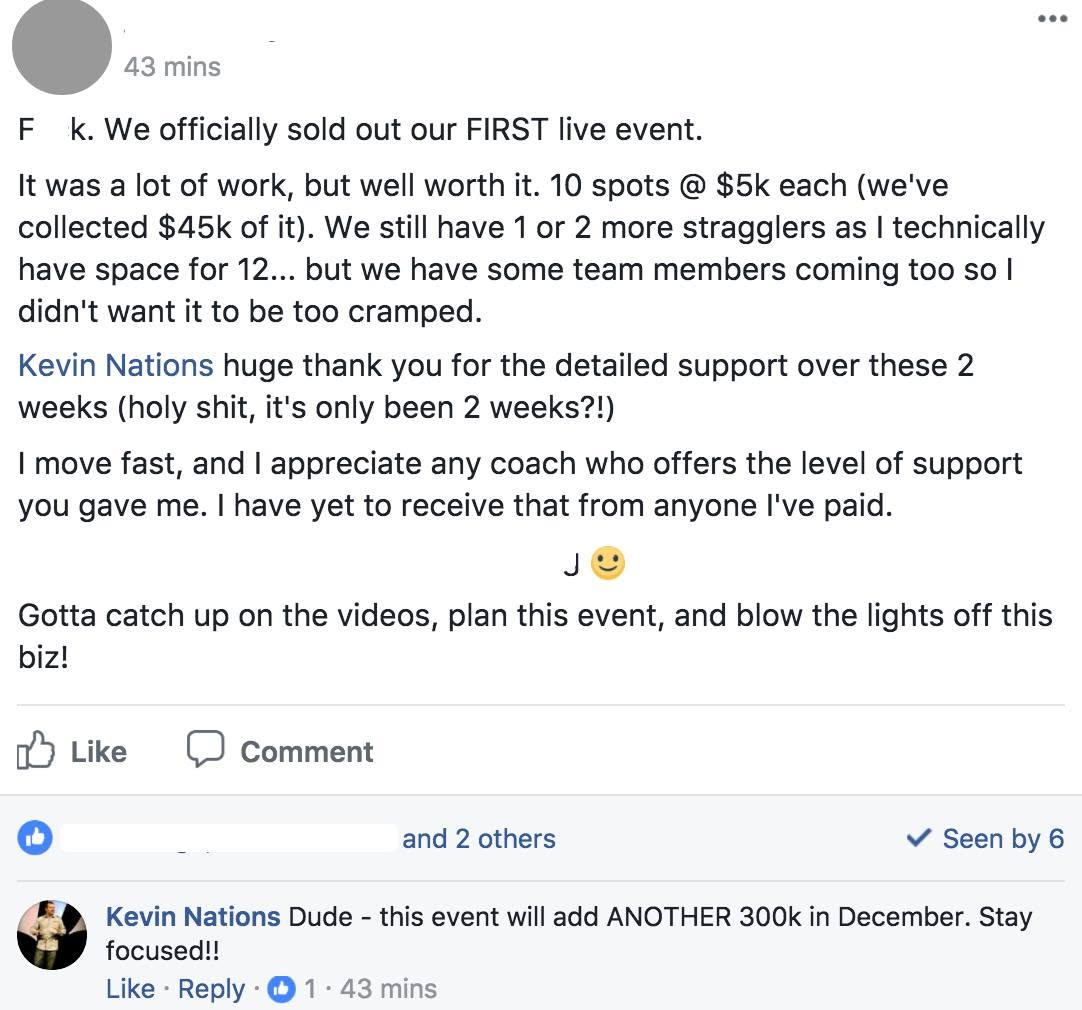
First-ever live event, 10 spots at $5K, gone within two weeks of starting with Kevin.
Twelve people into a workshop and five new clients at higher fees.
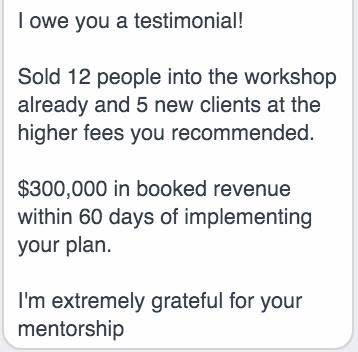
One attendee enrolled in ongoing support at $30K. Another did $220K in nine days, then left for a week of golf.
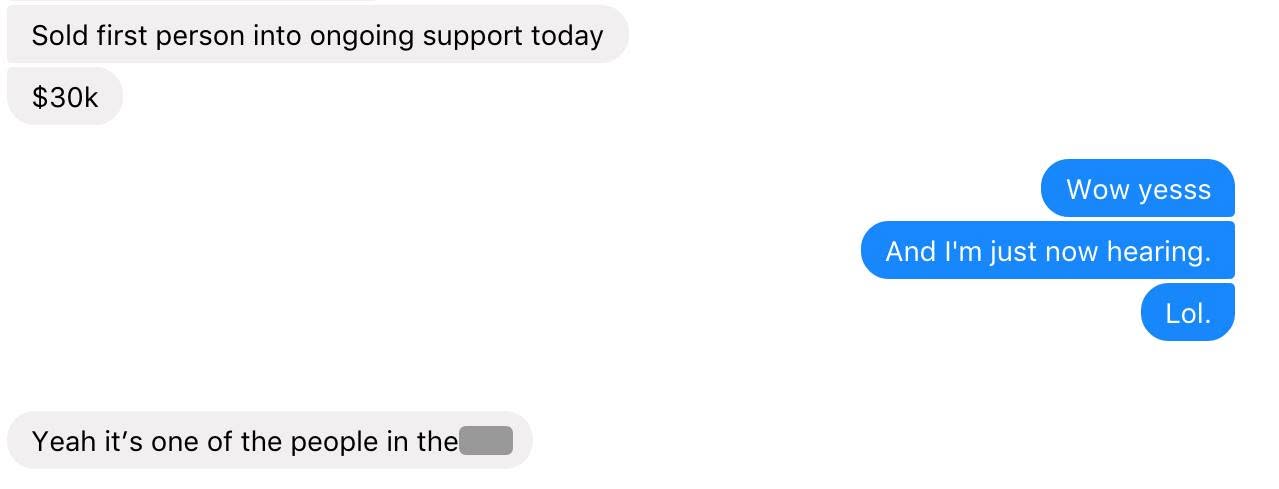
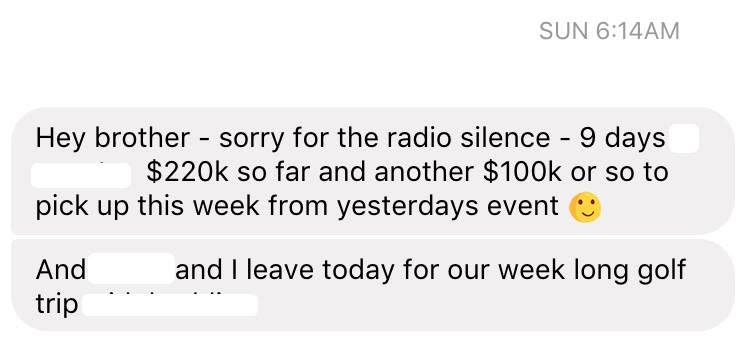
Notice nobody in those screenshots mentions funnels or audience size. They talk about small rooms, calm events, and clients who stay.
One thing I want to say plainly. Everyone up there had real expertise and a real offer before they ran an event. This model multiplies what’s already working. If you don’t have results you can stand behind yet, this isn’t your next step.
Why my event made $7K and theirs made six figures
I thought a small event was teaching great material to a small group and making an offer at some point. It isn’t, and that misunderstanding cost me real money.
Kevin teaches a specific anatomy for these events. Each day has a job. Things happen in a deliberate order, and the invitation to keep working together lands at one precise moment. Get the order wrong and you leave most of the money in the room. I know because I did.
I’ll share the one detail that surprised me most. When Kevin makes his offer, there are no order forms at the back of the room, no countdown, no pressure. Most of the time he won’t even accept applications that day. And 80 to 90% of attendees enroll anyway. The structure does the selling, and the structure is what he teaches at the workshop.
The mistakes I made were specific: I mixed up the types of content on the wrong days, I taught too much and brought in too many other speakers, and I made the event available live to people on Zoom. That last one was really bad.
Curious where my event leaked money? Ask me. That conversation is free.
Message LianaThe event is the beginning, not the business
Kevin’s $120K from five people wasn’t ticket sales. It came from people who experienced the room and chose to keep working with him.
When most of your revenue comes from people who already know you, everything changes. Ad spend drops. Your marketing gets nearly invisible to competitors. Your case studies multiply because clients who stay get better results. And your calendar belongs to you again.
If you want to learn this properly
Kevin teaches Big Money from Small Events in a live workshop. Only in person (not online), only a few times a year.
He’s selective about the room, the same way he teaches you to be selective about yours. He’s known for curating who gets in, because the room is part of the method. A small group of real experts sharpens everyone in it.
So there’s no checkout link on this page. The next step is a conversation. If you have real expertise, a real offer, and you’re tired of doing volume math on your own life, reach out. Tell me what you sell and what a great year looks like for you. If it’s a fit, I’ll make the introduction.
Message LianaWorst case, you leave with clearer math on your business. Best case, the next screenshots in this article are yours.