
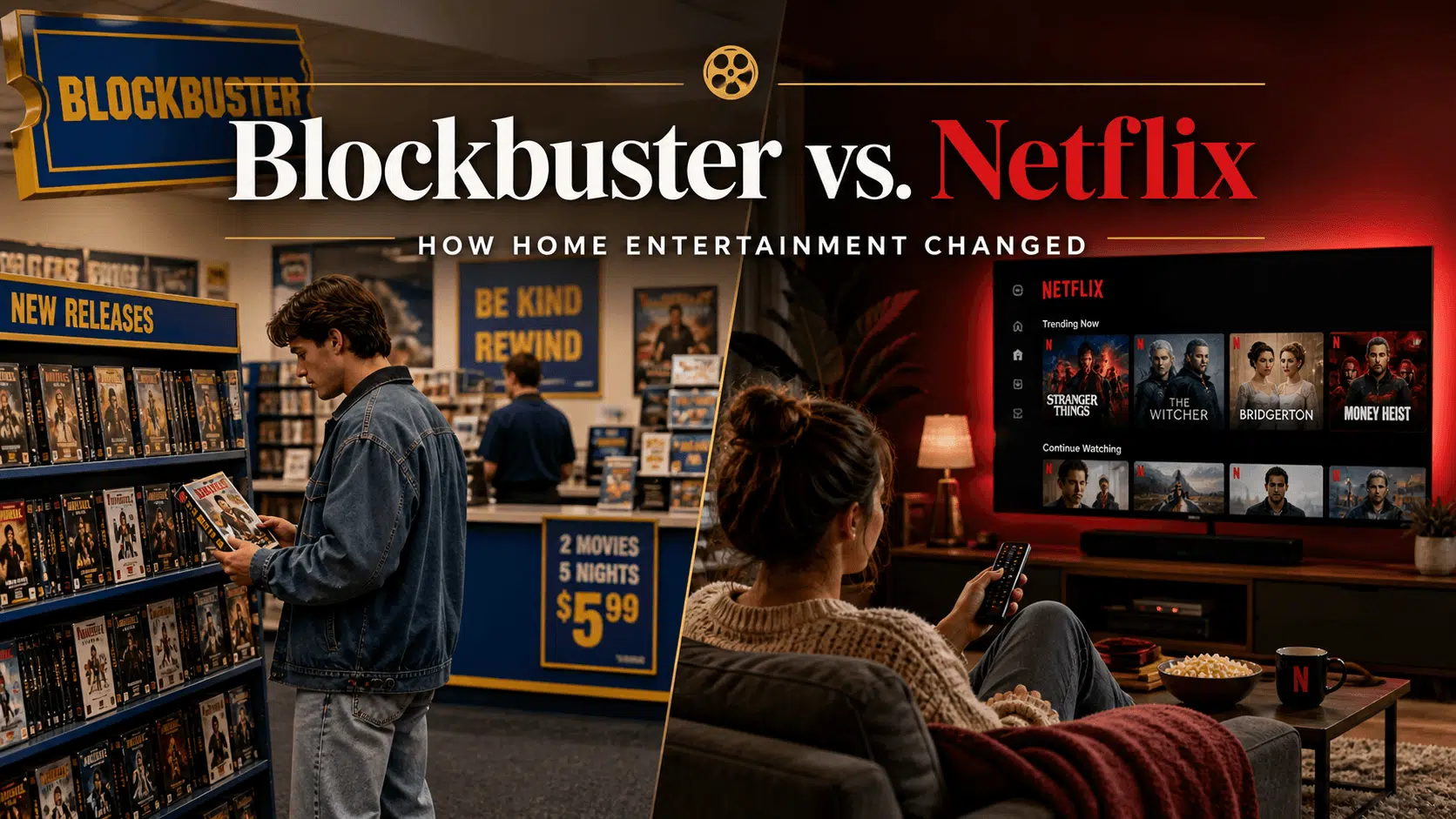
And why the most dangerous numbers in a business are the ones that look like strength
In the year 2000, two men flew to Dallas.
They had a meeting scheduled with the most powerful video rental company on earth. Their own company was struggling. They were burning through cash, they’d just had to lay people off, and they needed a deal badly enough to get on a plane and ask for one.
They walked into Blockbuster headquarters and made their pitch.
We’ll run your online business. Put our name under yours. Blockbuster.com, powered by us. All we need is $50 million.
The Blockbuster executives laughed at them. Literally laughed. One account describes the room going sideways with amusement at the idea that this tiny mail-order DVD company was worth anyone’s serious attention.
The two men flew home to California.
Their names were Reed Hastings and Marc Randolph. Their company was Netflix.
Here’s what nobody talks about when they tell that story.
Blockbuster wasn’t wrong to be skeptical. Netflix in 2000 was a mess. The DVDs took days to arrive. You had to decide what you wanted to watch before you actually wanted to watch it. Their subscriber numbers were unimpressive. Their losses were real.
Blockbuster had 9,000 stores. 60,000 employees. They were doing $6 billion a year in revenue.
From where they were sitting, Netflix looked like a hobby project with a server.
So why did the most powerful video rental company in history end up filing for bankruptcy ten years later while the hobby project became worth hundreds of billions of dollars?
It wasn’t streaming. It wasn’t technology. It wasn’t even that they missed the future.
It was $800 million a year.
The fee that wasn’t really a fee
That’s how much Blockbuster was making from late fees. Not from renting movies. From charging customers who forgot to return them on time.
Think about what that means for a second. Their single largest revenue line wasn’t coming from people enjoying their product. It was coming from people being punished for being human.
And Blockbuster knew customers hated it. This wasn’t a secret buried in some internal memo. It showed up in every survey, every comment card, every conversation at the counter where a customer pushed back on a charge they didn’t think was fair.
The response from leadership wasn’t to kill the fee. The fee was $800 million. You don’t kill $800 million.
Instead they trained staff to apologize more warmly. They created goodwill waivers for good customers. They built systems to remind you when your movie was due. They got very good at helping customers feel okay about paying something that should never have existed.
Meanwhile in California, Netflix quietly built their entire brand around four words.
No late fees. Ever.
Four words that did more damage than any technology
Not better movies. Not faster delivery. Four words that did more damage to Blockbuster than any technology ever could.
Because Netflix understood something Blockbuster’s spreadsheets were incapable of measuring. The late fee wasn’t an inconvenience. It was a tax on forgetting to be a perfect customer. And people don’t forget that they paid it. They remember it every single time they walk back through the door.
Netflix wasn’t selling movie rentals. They were selling the feeling of not being punished.
By 2004, Blockbuster finally understood what was happening. They hired a new CEO named John Antioco who looked at Netflix’s growth and got it immediately. He killed late fees. He launched Blockbuster Online. He started competing seriously enough that Netflix’s subscriber growth actually slowed down. Reed Hastings later admitted his team was genuinely scared during that period.
It was working.
Then Carl Icahn got involved.
The man who was right about the number and wrong about everything else
Icahn had taken a large position in Blockbuster stock and he was not happy about Antioco eliminating late fees. That decision was costing the company $400 million annually. This was not acceptable. He waged a proxy war, replaced board members, and eventually pushed Antioco out entirely.
He was right about the $400 million.
He just had no idea what it actually was.
It wasn’t profit sitting on the table. It was the fee their customers had been quietly paying while they waited for something better to come along. The moment Netflix gave them a real exit — with no drama, no confrontation, just a better deal in their mailbox every month — they left.
And they didn’t come back.
Blockbuster filed for bankruptcy in 2010. Netflix crossed $2 billion in revenue that same year.
There is exactly one Blockbuster left in the world. It’s in Bend, Oregon. It sells t-shirts to people who think the whole thing is funny now.
The question worth sitting with
The $50 million acquisition that got laughed out of a Dallas conference room in 2000 would have saved everything.
But here’s the thing that should make you genuinely uncomfortable.
Blockbuster didn’t die because they missed a meeting. They died because they had a number in their business that looked like strength and was actually the thing driving their best customers quietly toward the exit.
That kind of number doesn’t announce itself. It just shows up in the quarterly report looking healthy while somewhere else the slow bleed is happening.
The question worth sitting with is whether you have one too.


0 Comments